Single Person One Job: How Many Allowances?
This playful guide demystifies how many allowances a single person with one job should claim—so take a breath, grab a coffee, and let’s make paycheck math painless.

The Single Person One Job: How Many Allowances question is one of the most searched paycheck topics because it determines how much tax is withheld and how much lands in take-home pay; understanding allowances, W-4 settings, and withholding strategies helps optimize cash flow without nasty surprises at tax time. In this guide, we unpack how “allowances” historically worked, what changed with the redesigned W-4, how a single filer with one job can fine-tune withholding, and practical steps to hit the sweet spot between under-withholding (owing in April) and over-withholding (big refund but smaller paychecks). We’ll translate IRS guidance into plain English, compare common scenarios (single, one job, no dependents vs. single with student interest or side gig), show how to reflect credits and deductions on the current W-4, and give a simple framework to avoid penalties and smooth out cash flow throughout the year.
Quick Reality Check: “Allowances” Are Old Terminology
- The IRS redesigned Form W-4 in 2020 to remove “allowances.”
- Today, withholding is set using steps for filing status, multiple jobs, dependents/credits, deductions, and optional extra withholding.
- So while people still say “how many allowances,” the modern approach is to pick the right boxes and numbers on the updated W-4 to get the same outcome.

The Short Answer For A Simple Case
- Single, one job, no dependents, no itemized deductions, no other income: select Single (or “Single or Married filing separately”) and leave dependents and other adjustments blank.
- This generally mirrors the old-school idea of “1 allowance” for a straightforward single-earner setup, but now it’s just the default single-filer withholding.
When To Adjust From The Default
Consider increasing withholding (more taken out each paycheck) if any of these apply:
- Significant non-wage income (freelance, investment interest/dividends, crypto gains).
- Owed tax last year and expect the same this year.
- Prefer a buffer to avoid underpayment penalties.
Consider decreasing withholding (less taken out) if:
- Eligible dependents or credits (Child Tax Credit, Other Dependent Credit).
- Significant above-the-line deductions (HSA, traditional IRA) or itemized deductions greater than the standard deduction.
- Large pre-tax contributions via payroll (401(k), HSA, FSA) that reduce taxable wages.
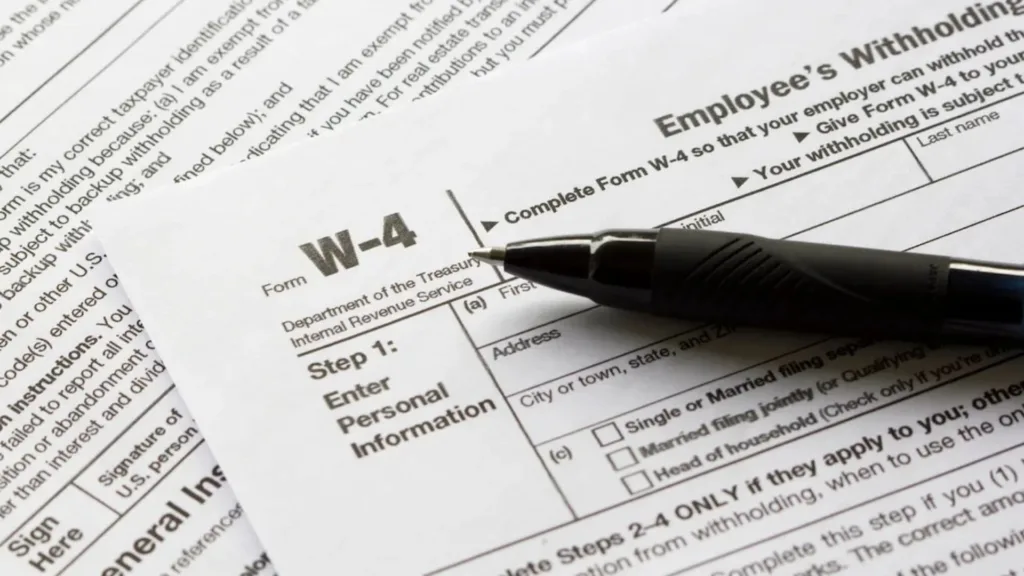
Step-By-Step: Filling The Current W-4 As A Single With One Job
- Step 1: Filing Status → choose Single or Married filing separately.
- Step 2: Skip if only one job and no spouse working.
- Step 3: Enter dependents only if eligible for credits; otherwise leave blank.
- Step 4a: Other income not from jobs (interest, dividends) → enter an annual amount to increase withholding if needed.
- Step 4b: Deductions → use if itemizing or claiming deductions exceeding the standard deduction; the W-4 instructions include a worksheet.
- Step 4c: Extra withholding → add a flat extra amount per paycheck if aiming to avoid owing or to offset side income.
Mapping Old “Allowances” To The New W-4 (Practical Equivalents)
- Old “0 allowances” ≈ higher withholding; today: Single status, no dependents, optionally add extra in Step 4c.
- Old “1 allowance” ≈ baseline single-earner withholding; today: Single status with no entries in Steps 3–4.
- Old “2+ allowances” ≈ lower withholding; today: claim credits in Step 3 and/or use Step 4b to reflect deductions that reduce tax.
Simple Scenarios And What To Do
- Single, One Job, No Dependents: select Single; leave Steps 3–4 blank for standard withholding.
- Single With One Child (Eligible For CTC): complete Step 3 with credit amounts to lower withholding.
- Single With Side Gig Income: consider entering expected annual non-wage income in Step 4a or add extra in Step 4c.
- Single With Large 401(k)/HSA Contributions: you may see naturally lower withholding since taxable wages drop; still review a paycheck to confirm.
- Single Who Owed Last Year: add a fixed extra per paycheck in Step 4c or reflect other income in Step 4a.

How To Fine-Tune With A Paycheck Checkup
- Use an IRS-caliber withholding estimator or a reputable paycheck calculator. Plug in current pay, pre-tax deductions, credits, and non-wage income.
- Adjust Step 4c by a small amount (for example, $15–$40 per paycheck) and re-test until the projection shows a near-zero balance due at year-end.
- Revisit after major changes: raise, new bonus, side income, change in deductions, or new credits.
Common Pitfalls To Avoid
- Assuming the biggest refund is best: it’s forced savings but reduces each paycheck; aim for balance.
- Ignoring side income: untaxed income can lead to a surprise bill; offset with Step 4a/4c or quarterly estimates.
- Over-claiming dependents/credits: only enter credits that truly apply to avoid under-withholding.
Practical Rule Of Thumb
- Start with the default single-filer setup if uncomplicated.
- If last year’s result was a refund >$1,000, consider reducing withholding via Step 3 or Step 4b if eligible, or just let it ride if that’s your preference.
- If last year’s result was a tax bill >$500, add a modest amount in Step 4c or reflect other income in Step 4a to close the gap.
mini Glossary
- Withholding: tax your employer sends to the IRS based on your W-4.
- Credits: dollar-for-dollar tax reductions (e.g., Child Tax Credit).
- Deductions: reduce taxable income (standard vs. itemized).
- Exempt: claiming no withholding (rare and restrictive; don’t claim unless truly eligible).

Example Walkthrough
- Profile: Single, one job, $60,000 salary, no dependents, 5% 401(k) contribution, no other income.
- Action: Step 1 Single; skip Step 2; Step 3 blank; Step 4a blank; Step 4b blank; Step 4c blank.
- Outcome: Standard single withholding; review first two paychecks, then tweak Step 4c if aiming for a smaller or larger refund.
When To File A New W-4
- After a raise, bonus structure change, or new second job.
- After starting or stopping a side hustle.
- After gaining or losing eligibility for credits or significant deductions.
- At least once a year as a checkup.
FAQs
Q: What should a single person with one job put on a W-4?
A: Choose Single status; if no dependents or other income, leave the rest blank for standard withholding, then adjust Step 4c if a past tax bill or side income suggests more withholding is needed.
Q: Are “allowances” still used on the W-4?
A: No—allowances were removed in 2020; use filing status, dependents/credits, deductions, and optional extra withholding instead.
Q: How do I avoid owing at tax time?
A: Reflect other income in Step 4a or add a small fixed amount in Step 4c, and re-check after raises or big changes.
Q: Can I claim exempt as a single filer?
A: Only if owed no tax last year and expect none this year; otherwise don’t claim exempt.E


